
You can study for months and still lose points on test day for stupid reasons, bad sleep, bad pacing, bad nerves. That is why a solid PMP exam day strategy matters as much as your study plan.
The PMP exam in 2026 is a long sit: 180 questions, 240 minutes, two optional 10-minute breaks, and more than one question format. It’s not a sprint. It’s a four-hour thinking job.
If you want exam day to feel steady instead of chaotic, start before the clock ever starts.
Get your body and materials ready the day before
Pack the right items and confirm your exam setup
The day before the exam should feel boring. That’s the goal. You don’t want to make ten small decisions at 6:30 a.m. when your brain is already buzzing.
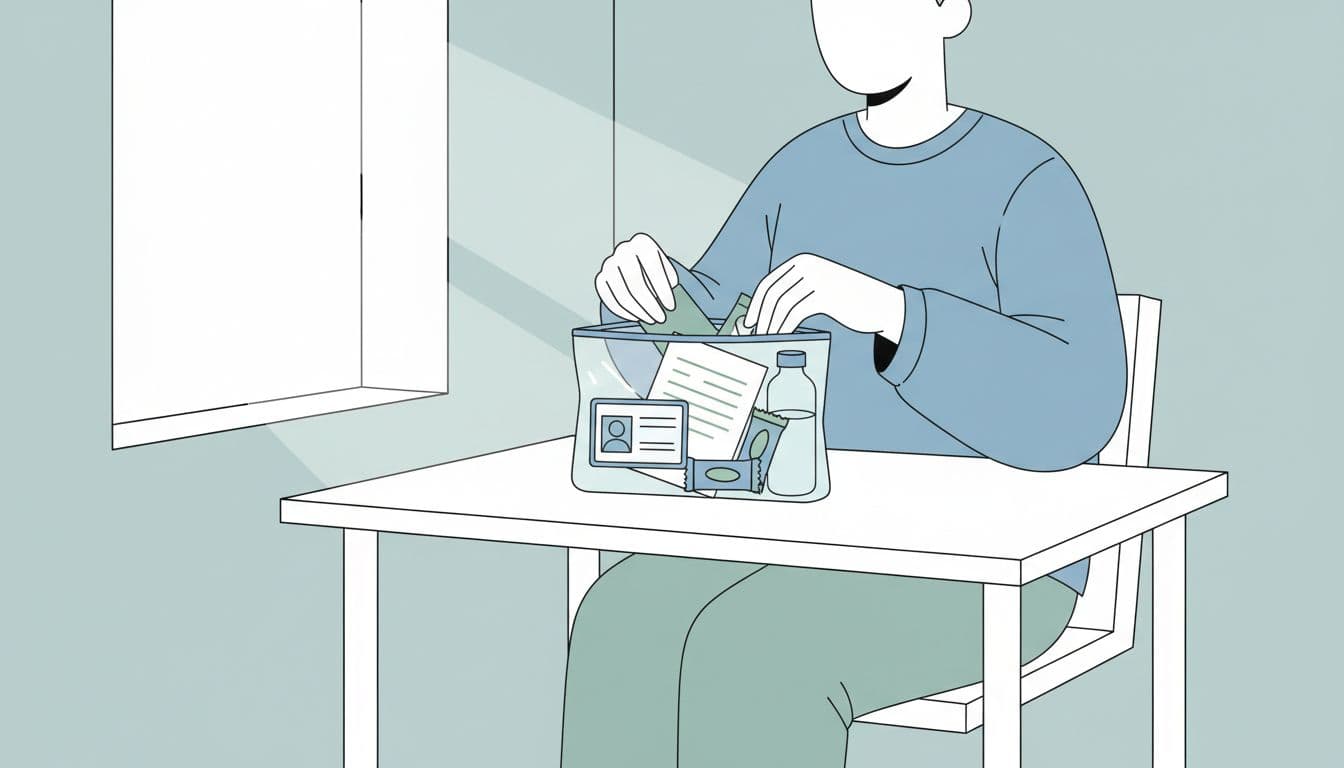
If you’re going to a testing center, pack your valid photo ID, your confirmation details, and anything the center rules allow. Then stop. Don’t turn your bag into a camping trip.
If you’re testing online, treat your setup like part of the exam. Test your camera, microphone, internet connection, and power source. Open the exam software ahead of time if that’s allowed, and make sure your room is quiet, clean, and boring enough for a proctor.
A short checklist is enough:
- Your ID is valid and matches your registration.
- You know your exam time, location, or login process.
- Your route, parking, or home setup is settled.
- Your desk, charger, and internet are ready.
Eat, sleep, and prep your mind for a long test
Don’t try to become a different person the night before. If you normally drink coffee, have coffee. If you never drink an energy drink, exam day is not the time to start.
Eat a steady dinner. Drink water, but don’t overdo it. Get to bed early enough that you give yourself a real shot at sleep, even if nerves keep you awake for a while. One imperfect night won’t erase months of work.
Last-minute cramming usually makes you feel busy, not better. A light review is fine. A three-hour panic session is not. If you want one last confidence boost, do a short session with a realistic PMP exam prep tool rather than flipping through random notes. Brain Sensei’s story-based practice can help the exam feel familiar, which is what you want. Familiar beats dramatic.
The goal isn’t to feel zero stress. The goal is to keep stress from calling the shots.
Choose a test-day plan that fits your exam location
How to handle a testing center exam without extra stress
Testing centers are good for one reason: fewer home distractions. They also add travel, parking, check-in, and shared-room energy. So plan for those, not against them.
Arrive early. Not “right on time” early. Give yourself enough buffer for traffic, parking, building security, and the check-in process. Rushing into the room with your pulse already spiking is a terrible way to start a four-hour exam.
Once you’re checked in, use the restroom before the tutorial ends if you need to. Settle your body. Adjust your chair. Put your attention on your screen, not on the person coughing three stations away.
If you want another practical take on test-center and online nerves, this PMP exam day survival guide has a few useful reminders. The best advice is still simple: show up early, follow instructions, and keep your lane.
How to stay focused during an online proctored exam
Online testing sounds easier until your dog barks, your internet stutters, or you wonder whether looking away for two seconds will trigger a warning.
Set up your room before exam day. Clear the desk. Fix the lighting. Keep your face visible. Put your phone in another room. Don’t leave extra papers, screens, or random objects nearby if the rules don’t allow them.
If the proctor pauses you for a check, don’t spiral. Pause. Breathe. Follow the instruction. Tech hiccups feel huge in the moment, but panic makes them worse. The same goes for a slow load or brief system delay. Stay still, stay calm, and let the process catch up.
Online works best if your home is predictable. Testing center works best if your home is not. Pick the option that gives you fewer surprises, not the one that sounds more convenient on paper.
Use a pacing plan so you do not run out of time
Break the exam into smaller time blocks
Looking at 180 questions all at once is like staring at mile 26 from the starting line. Useless. Break the exam into three chunks of 60 questions.
You get 240 minutes total, with two optional 10-minute breaks after question 60 and question 120. That means your pacing has to stay honest from the start. A simple target is about 75 to 80 minutes per 60-question block, depending on how much review time you want inside each section.
This quick plan keeps the clock from feeling abstract:
| Exam section | Questions | Target time | What to check |
|---|---|---|---|
| Block 1 | 1 to 60 | About 75 to 80 minutes | Are you reading cleanly, not rushing? |
| Block 2 | 61 to 120 | About 75 to 80 minutes | Are you still flagging and moving on? |
| Block 3 | 121 to 180 | Use remaining time wisely | Can you finish strong without panic? |
The point is not perfect math. The point is control. If you’re slow at question 25, adjust early. If you’re flying and making careless mistakes, slow down.
A full-length PMP mock test helps here more than short quizzes do. You need practice sitting with the clock, not only answering questions. That is where good pacing habits get built.

Use breaks wisely so your brain can reset
Take the breaks unless you have a strong reason not to. Ten minutes is enough to reset your brain if you use it well.
Stand up. Stretch. Drink water. Use the restroom. Take a few slow breaths. Then come back. Don’t spend the break replaying the last 60 questions like game film.
Also, don’t grab your phone and fill your head with texts, news, or last-minute advice. You do not need fresh input in the middle of the exam. You need a reset.
Think of each break as a hard stop between rounds. New section, new attention, clean slate.
Handle hard questions without spiraling
What to do when a question feels confusing or unfamiliar
Some questions will feel messy on purpose. That’s normal. PMI-style questions often test judgment, not recall.
Start by reading the last line first. What is the question asking you to do? Then read the scenario. That simple move can save time and cut noise.
Next, eliminate weak answers. Watch for absolutes like “always” and “never.” Be careful with answers that sound fast, aggressive, or manager-centered when the better move is to assess, communicate, coach, or review first. On many situational questions, the best answer is the best management action, not the most dramatic one.
If you’re down to two answers, ask which one fits PMI’s mindset better. Protect value. Work with the team. Understand before reacting. One useful outside perspective on those habits is in these 2026 PMP exam day tips, especially around elimination and staying composed.
How to stop panic from taking over mid-exam
Panic lies. It tells you one ugly question means you’re failing. It tells you the clock is moving faster than it is. It tells you to rush.
Don’t listen.
Use a reset you can do in under 20 seconds. Try box breathing, inhale for four, hold for four, exhale for four, hold for four. Or say something plain to yourself: “One question. One decision.” That’s enough.
You also need perspective. You are not supposed to feel certain on every item. Nobody does. A hard patch is not proof of anything. It is a patch. Move through it.
Avoid the most common exam day mistakes
The mistakes that waste time and energy
Most exam-day mistakes are preventable, which is both annoying and good news.
Candidates hurt themselves when they cram late, sleep badly, eat something that wrecks their stomach, or arrive rushed. They also lose time by changing answers too often, sitting too long on one question, or skipping breaks because they think toughness beats recovery. It doesn’t.
Another common mistake is dragging one bad section into the next. Maybe the first 20 questions felt brutal. Fine. That section is over. Carrying that frustration into the next block is like spilling coffee on your own notes and then blaming the mug.
If you want a calmer picture of the same idea, these exam-day confidence tips line up with what works: prepare the logistics, trust your process, and don’t let emotion eat your time.
What to remember about the PMP exam format in 2026
Keep the format in your head so nothing feels strange on test day. The 2026 PMP exam has 180 questions and 240 minutes total. Two optional 10-minute breaks come after question 60 and question 120.
The content still centers on three domains: People at 33%, Process at 41%, and Business Environment at 26%. You’ll see a mix of multiple-choice, multiple-response, matching, drag-and-drop, fill-in-the-blank, point-and-click, and scenario-based questions. The exam also spans predictive, agile, and hybrid approaches, with agile and hybrid making up a large share.
That matters because surprises create stress. When you already expect variety, variety doesn’t throw you.
Conclusion
A smart PMP exam day plan starts the day before. It carries through breakfast, check-in, the first hard question, both breaks, and the final submit button.
Trust your prep. Use your pacing checkpoints. Take the breaks. When a question goes sideways, stay with your process instead of your fear.
After you submit, you may see a short survey and then an unofficial result at the test center or on screen, depending on your delivery method. Your official result follows later from PMI. At that point, your job is over. The best thing you can bring into that moment is control, not perfection.