
Most PMP agile questions are not memory tests. They are judgment tests.
That is why people who can recite definitions still miss them. The exam gives you a situation, hides the real issue inside it, then asks what you should do next. If your instinct is too rigid, too passive, or too boss-like, you lose points.
The good news is that these questions get easier once you see the pattern. You do not need fancy jargon. You need a practical way to spot the best answer, avoid the traps, and think the way PMI expects.
How much agile is really on the PMP exam right now?
In 2026, most current exam breakdowns point to about 60% agile or hybrid content and about 40% predictive. Think of it as six out of ten questions leaning adaptive, with four still using plan-driven logic. The exam usually does not label the approach for you, so you have to read the clues in the scenario. A recent 2026 exam content outline summary reflects that same split.
This quick view helps:
| Approach | Rough exam share | What it usually looks like |
|---|---|---|
| Agile | Part of the 60% | Iterations, feedback, backlog, team ownership |
| Hybrid | Part of the 60% | Fixed dates or approvals plus adaptive delivery |
| Predictive | About 40% | Baselines, formal plans, change control, phase gates |
What the 60 percent agile and hybrid split means for your study plan
You should spend more time on scenario practice than on term drills. Get comfortable with team collaboration, changing priorities, feedback loops, and delivering value early. If a question asks what you should do first, the answer often involves the team, the product owner, or the customer, not a document update.
Why predictive knowledge still matters on an agile-heavy exam
You still need predictive basics. Some questions will use words like baseline, scope statement, integrated change control, or formal approval. Hybrid questions mix both worlds, so if you force an agile answer into a plan-driven scenario, you can talk yourself into the wrong choice.
The PMI agile mindset you need to answer questions the right way
A lot of wrong answers sound efficient. That is the trick. They sound decisive, but they ignore people, learning, or customer value.
The better answer usually protects the team, brings the right people in early, and deals with the issue before it grows.

How servant leadership shows up in PMP agile questions
On agile PMP questions, you are not the boss with the loudest voice. You are the coach. You remove blockers, help the team talk to each other, and keep work moving.
If a team member is stuck, you do not shame them. You ask what is blocking progress and help clear it. If two people disagree, you do not jump straight to escalation. You help them work through it.
If an answer starts with blame or control, it is usually not the best agile answer.
How to spot answers that match PMI values instead of old-school management
PMI usually likes answers that are transparent, collaborative, and timely. That means you should be suspicious of choices that say to wait, blame, hide bad news, or make a top-down decision without the team.
A useful shortcut is this: if one option helps the team inspect, adapt, and keep value flowing, and another option shuts people down, pick the first one. A helpful guide on spotting agile vs predictive PMP questions can sharpen this habit, but the real win is training your eye to spot the mindset fast.
The most common agile question types you will see on the exam
The exam repeats the same patterns with different wording. Once you know what each pattern is testing, the questions stop feeling random.
Here is the short version:
| Question type | What it is really testing | What PMI usually prefers |
|---|---|---|
| Sprint or iteration choices | Flow, focus, team ownership | Clarify with the team, protect the goal, inspect before changing work |
| Stakeholder communication | Feedback timing and alignment | Share progress early, confirm expectations, invite feedback |
| Requirement changes | Value and reprioritization | Reassess priority, work through the backlog or agreed process |
| Team conflict | Leadership style | Direct conversation, coaching, root-cause thinking |

Questions about sprint and iteration decisions
These often ask what to do when work changes mid-cycle. Your job is not to cram in new tasks because someone asked loudly. Your job is to protect focus, check priority, and use the agreed team process.
Questions about stakeholder collaboration and communication
These test whether you involve the right people early enough. If a stakeholder seems unhappy, do not guess. Get feedback. If expectations are fuzzy, clarify them before the team builds the wrong thing.
Questions about changing requirements and reprioritization
Agile welcomes change, but not chaos. A new request usually means you review value, risk, and priority with the product owner or equivalent role. It does not mean someone can skip the line because they are senior.
Questions about team conflict and disagreement
When the team has tension, the best answer is usually not punishment or instant escalation. It is direct conversation, coaching, and figuring out what is causing the friction. Think fix the system, not blame the person.
How agile, predictive, and hybrid questions differ on the PMP exam
Before you read the answers, figure out what kind of project you are in. That one move saves points.
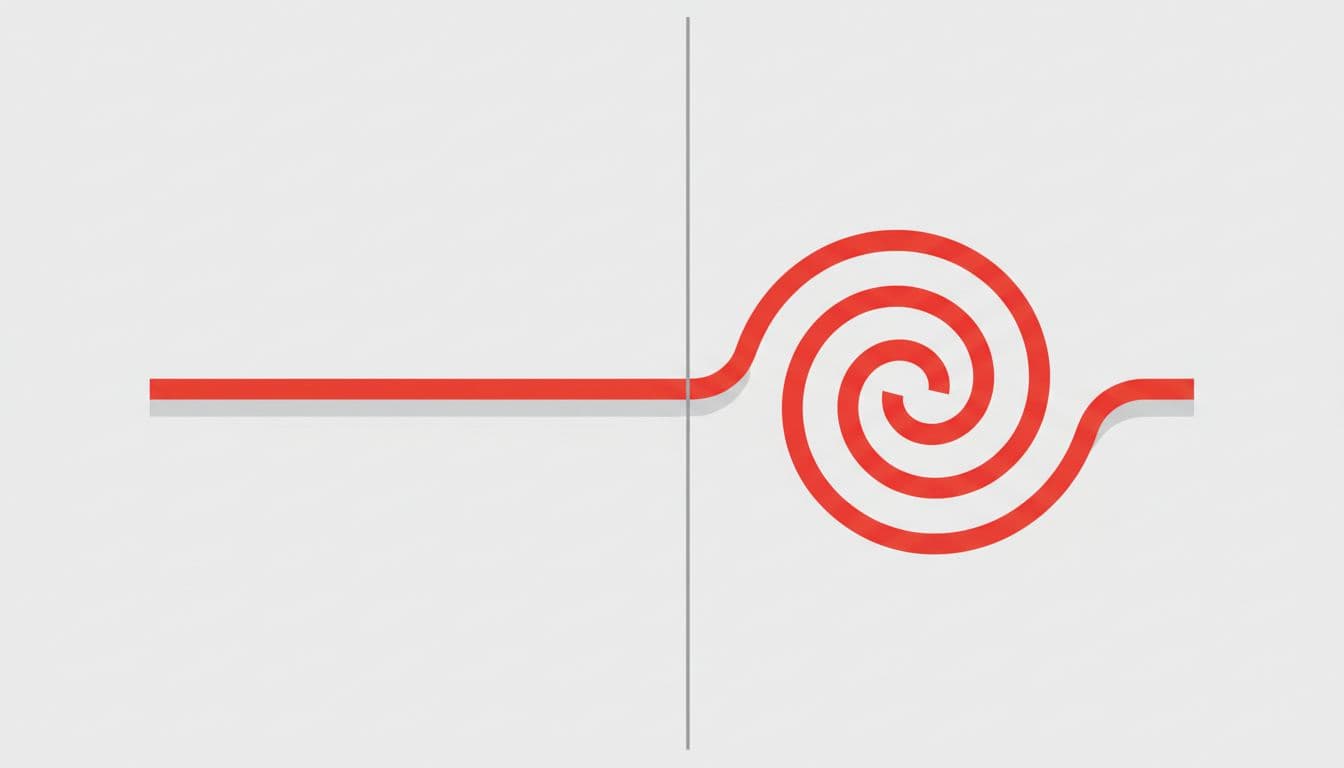
This side-by-side view makes it easier:
| Clue | Agile | Hybrid | Predictive |
|---|---|---|---|
| Planning style | Rolling, iterative | Some upfront, some iterative | Detailed upfront plan |
| Change handling | Expected and reprioritized | Allowed, but balanced with controls | Formal change review |
| Team structure | Self-managing | Mixed | More directed roles |
| Stakeholder involvement | Frequent feedback | Regular checkpoints and reviews | Scheduled approvals |
How to tell when the question is really hybrid
Hybrid questions leave fingerprints. You may see a fixed deadline, regulatory approvals, contract rules, or phase gates, but the team still delivers in small increments. That means you cannot answer like a pure Scrum purist or a pure waterfall manager. You need both structure and flexibility.
Which answer style usually fits each approach
Agile answers lean toward conversation, iteration, and adaptation. Predictive answers lean toward impact analysis, approved plans, and change control. Hybrid answers usually split the middle. If the scenario mixes firm constraints with adaptive delivery, your answer should do the same.
How to pick the best answer when more than one choice looks right
This is where a lot of candidates slip. They find the first answer that sounds okay and move on. The exam wants the best answer, not the first decent one.
A quick step-by-step way to read an agile scenario
Use this simple process:
- Find the real problem, not the noisy detail.
- Decide whether the project is agile, predictive, or hybrid.
- Ask which option helps people collaborate and keeps value moving.
- Remove answers that blame, delay, or skip the right conversation.
Why the first good answer is not always the best answer
Imagine a team member misses a commitment. One option says to report the issue to the sponsor. Another says to talk with the team, understand the blocker, and adjust the plan. Both sound possible. The second answer is better because it solves the problem earlier and closer to the source.
If your prep still feels too focused on memorizing terms, this PMP exam preparation and application guide is a good reminder that practice questions, agile thinking, and exam strategy belong in the same study plan.
Common mistakes candidates make with PMP agile questions
Many wrong answers come from real-world habits. You may work in a place where managers make every call or where bad news stays buried. The PMP exam does not reward that.
This table shows the shift you need:
| Wrong instinct | Better exam thinking |
|---|---|
| Control first | Coach first |
| Wait and see | Inspect and address it early |
| Match a term | Read the situation |
Why memorizing agile terms is not enough
You can know what a retrospective is and still miss the question. Why? Because the exam cares about what you do with that ceremony. Do you use it to learn and improve, or do you ignore the team’s feedback and move on?
How overcontrolling or waiting too long can cost you points
Extreme answers miss the mark. So do passive ones. PMI usually prefers a balanced response, early action, and team involvement. Not panic. Not punishment. Not silence.
Practice with sample PMP agile questions and plain-English explanations
This is where pattern recognition starts to stick. A story-based course helps because you remember the decision, not only the term. That is why Brain Sensei’s approach works for many candidates, and its guide to PMP and CAPM exam simulators is useful when you want timed practice with realistic, situational questions.
Sample question on a changing requirement in the middle of a sprint
A stakeholder asks for a new feature halfway through the sprint and says it is urgent. What should you do?
The best answer is to review the request with the product owner and team, then decide whether it belongs in the backlog for reprioritization or whether a sprint change is justified by the agreed process. Do not add it quietly. Do not reject it without review.
Sample question on a team conflict during a retrospective
Two developers argue during a retrospective. One says testing is slowing delivery. The other says quality is getting ignored.
The best answer is to facilitate a direct, respectful conversation and help the team find the root cause. Retrospectives are for improvement, not blame. Escalating to management right away is usually too heavy and too early.
Sample question on a hybrid project with fixed dates and flexible delivery
Your project has a non-negotiable launch date, formal approval gates, and iterative feature releases. A new request appears after planning.
This is hybrid. The best answer is to assess impact against the fixed constraints, then work through the approved change path while still using backlog-style prioritization for flexible scope. You are balancing control and adaptation, not picking one side.
Conclusion
The hardest PMP agile questions usually are not hard because of vocabulary. They are hard because they test your mindset under pressure.
When you read a scenario, look for the project approach, the people involved, and the next action that protects value. The best answer is often the one that helps the team, serves the customer, and fits PMI’s way of thinking.