
Yes, the PMI-ACP is moderately hard to hard in 2026, but it’s also very passable. The exam gets its reputation from one thing: it tests judgment, not trivia.
If you already work in sprints, retrospectives, backlog refinement, and team collaboration, it feels more natural. If you’ve mostly studied from notes and flashcards, the PMI-ACP exam difficulty can feel higher than expected. The good news is simple, once you understand how the exam thinks, it gets far less intimidating.
What PMI-ACP exam difficulty really feels like
Here’s the plain-English version: the exam feels easier when the question sounds like your workday, and harder when it feels like a logic puzzle with four half-right answers.
This quick breakdown helps set expectations:
| Part of the exam | How it usually feels |
|---|---|
| Core agile values and team behavior | Easier |
| Broad framework coverage | Moderate |
| Scenario questions with “best” answers | Harder |
That last row is where most of the friction lives.
Why the PMI-ACP feels easier for active agile practitioners
If you already sit through sprint planning, retros, standups, and backlog discussions, the exam won’t feel foreign. Real experience helps you spot the agile answer faster, because you’ve seen what happens when a team gets blocked, when priorities shift, or when a stakeholder barges in with a new request.

Why pass rate rumors can be misleading
PMI does not publish an official pass rate. So when you see exact numbers in forums or social posts, you’re looking at guesses, tiny samples, or plain rumor. Candidate writeups can still help, like this difficulty overview from Agile Exam Academy, but they are not PMI data.
PMI doesn’t publish an official pass rate, so any exact percentage online is unofficial.
What makes the PMI-ACP exam challenging
The exam is challenging for a fair reason. It wants to know whether you can think like an agile practitioner across different situations, not whether you can recite a glossary.
Agile mindset matters more than memorization
You need to understand agile values, team empowerment, servant leadership, quick feedback, and continuous improvement. Memorizing definitions might help you eliminate one bad answer, but it usually won’t get you to the best answer.
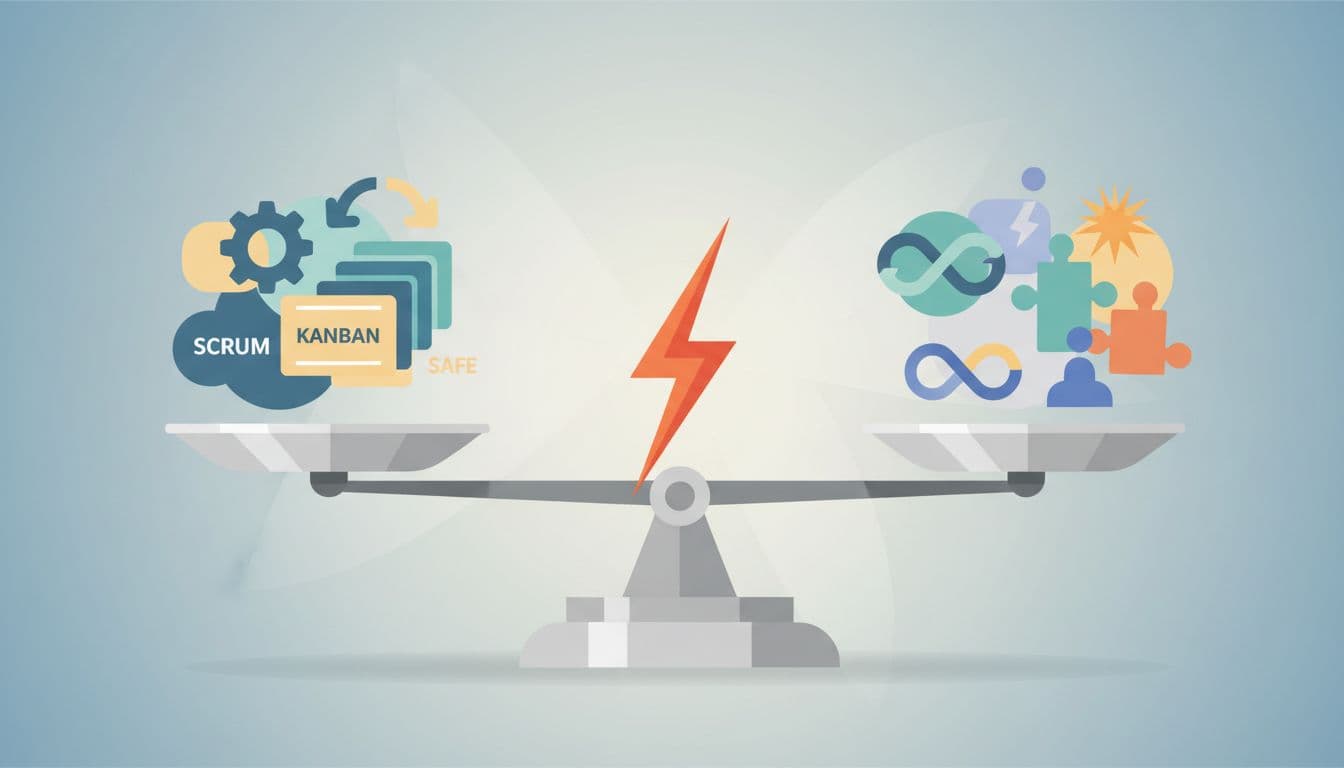
The exam covers more than Scrum
Scrum matters, but Scrum alone isn’t enough. PMI-ACP reaches into Kanban, Lean, XP, hybrid approaches, and general agile principles. If your prep is “Scrum guide plus vibes,” you’re leaving holes in your coverage.
Question style can make simple topics feel hard
A question might describe a team conflict, a delivery delay, or a sudden change in priorities. Then it asks what you should do next. For example, a product owner asks for a high-value change in the middle of an iteration. Do you reject it, escalate it, rewrite the whole plan, or talk with the team and re-prioritize based on value and capacity? More than one option sounds reasonable. Only one is the most agile.
How the PMI-ACP exam structure affects your score
The format adds pressure. You face 120 questions in 3 hours, and that clock moves faster than you’d think once each item asks for judgment instead of recall.
What the question wording is really testing
Wording usually points you toward agile values. Answers that support team ownership, quick feedback, collaboration, and improvement are often stronger than answers built on overplanning, command-and-control behavior, or heavy documentation. That’s a common trap, the “organized” answer isn’t always the agile one.
How to pace yourself during the exam
Reading carefully matters more than reading fast. Rushing makes you miss key details like “first,” “next,” or “best.” Practice exams help you build rhythm, so you stop treating every question like a surprise.
How PMI-ACP compares with PMP and CSM
A lot of candidates want a simple comparison, because “hard” means nothing without context. In most cases, PMI-ACP lands between CSM and PMP.
Here’s the quick version:
| Exam | Main focus | Topic breadth | Usual feel |
|---|---|---|---|
| CSM | Scrum basics | Narrow | Easier |
| PMI-ACP | Agile methods and scenarios | Broad | Moderate to hard |
| PMP | Project management across approaches | Widest | Usually hardest overall |
PMI-ACP vs CSM: why CSM feels simpler
CSM is usually more beginner-friendly because it stays closer to Scrum basics. PMI-ACP goes wider and asks more scenario-based questions, so it expects stronger judgment, not just framework familiarity.
PMI-ACP vs PMP: which one feels harder
For most people, PMP is harder overall because it covers more project management ground. Still, PMI-ACP can feel tougher if your agile thinking is weak. Candidate comparisons in this 2026 certification guide land in roughly the same place, though that’s still commentary, not official PMI scoring data.
Which topics are hardest on the PMI-ACP exam
Some topics cause more misses than others. Usually, the harder areas are mindset, team behavior, flow, and adaptation across frameworks.
The topics Scrum-only candidates usually miss
If you’ve worked only in Scrum, Kanban flow limits, Lean thinking, XP practices, and hybrid decisions can trip you up. A question might describe a team that needs faster throughput and less work in progress. If you reach for Scrum ceremonies alone, you may miss the better Kanban-style answer.
The behaviors and mindset questions that trip people up
These are the questions where the efficient answer isn’t the agile answer. Telling a manager to assign tasks, pushing more reporting instead of feedback, or solving conflict by authority can look neat on paper. The exam usually prefers coaching, collaboration, transparency, and team ownership.
Why some candidates fail the PMI-ACP exam
Most failures come from weak prep habits, not from the exam being impossible. People don’t usually fail because the content is beyond them. They fail because they trained for the wrong thing.
The biggest prep mistakes to avoid
- Studying definitions without enough scenario practice
- Relying only on Scrum knowledge
- Skipping full-length practice tests
- Reviewing scores, but not reviewing why answers were wrong
What a weak test day strategy looks like
It looks like rushing, second-guessing every marked item, and refusing to eliminate bad options. If two answers are clearly less agile, cut them and make the decision. Waiting for perfect certainty wastes time you don’t have.
How much agile experience helps you pass
Experience helps, sometimes a lot. If you’ve already handled team conflict, changing stakeholder priorities, or delivery issues, you can usually read a question and find the intent faster than a beginner.
When experience helps most
It helps most with messy scenarios. Think blockers, priority changes, unhappy stakeholders, or a team that isn’t self-organizing yet. That’s where lived experience pays off.
When experience is not enough
Work experience doesn’t always cover the full exam map. You still need to study broader framework coverage and get used to PMI-style phrasing. Plenty of experienced people get surprised when a familiar workplace habit isn’t the most agile answer on the test.
How long you should study and how to know you are ready
Most first-time candidates do well with a steady plan, not a cram session. If you already work in agile every day, you might need 4 to 6 weeks. If your experience is mixed, 6 to 10 weeks is more realistic. If you’re newer to agile, 10 to 12 weeks and roughly 100 to 120 hours is a safer target.
A realistic study timeline for most first-time candidates
The key is consistency. An hour most days beats a giant weekend binge. Short, repeated exposure helps you build judgment across Scrum, Kanban, Lean, XP, and hybrid questions.
Signs you are ready to schedule the exam
You’re close when your practice scores stay stable, not lucky. You should also feel comfortable with scenario questions and be able to explain why one answer is best, not merely why it looks acceptable. If you still guess your way through Kanban or hybrid questions, keep studying.
The best way to prepare without making the exam feel harder
The smartest prep is practical. You want scenario-based practice, solid review of agile values, and enough framework coverage that the exam stops surprising you.
Why practice questions matter more than rereading notes
Practice questions train pattern recognition. They teach you how agile wording works, how to manage time, and how to learn from wrong answers. Rereading notes feels productive. Questions are what change your score.
How to use scenario practice to build confidence
Use realistic scenarios, not just short fact checks. Think team conflict, shifting priorities, workflow bottlenecks, and stakeholder pressure. If dry study material makes your eyes glaze over, a story-based option like Brain Sensei’s PMI-ACP exam prep course can help. It’s updated for 2026 and includes a realistic simulator, which is the kind of practice that makes the exam feel familiar instead of slippery.
Conclusion
The PMI-ACP is challenging, but it’s not some impossible wall. If you study for agile thinking, not just agile vocabulary, the difficulty becomes manageable fast.
Your biggest edge is broad coverage, honest practice, and the ability to choose the best response under pressure. If you build that skill, the exam stops feeling like a trick and starts feeling like work you’ve already learned how to do.